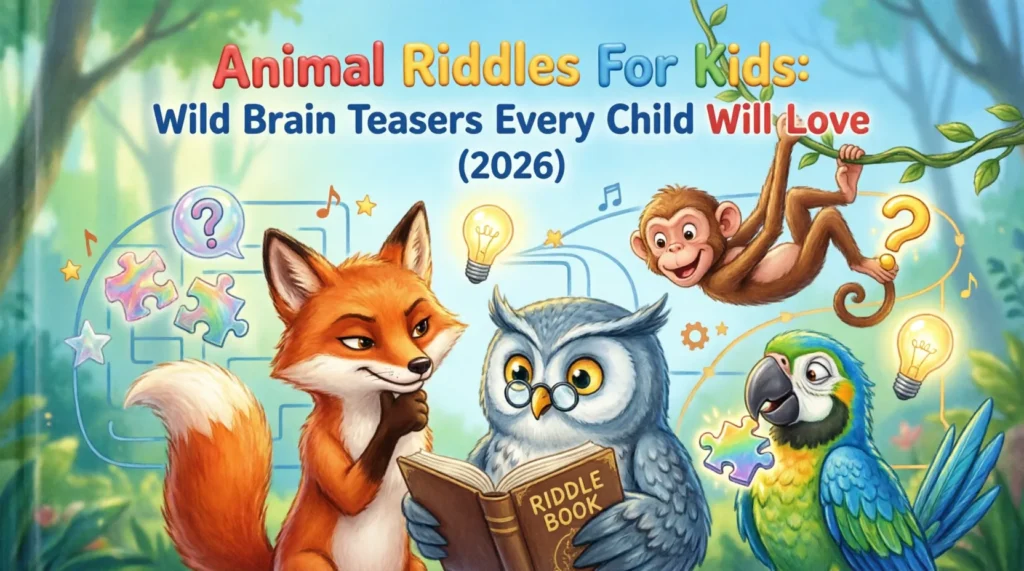
In short, animal riddles for kids are playful brain games that mix silly clues, creative thinking, and lovable creatures into one fun activity. They’re perfect for parents, teachers, road trips, classrooms, parties, and curious young minds who enjoy guessing games. Keep scrolling to discover hilarious and clever riddles your kids will want to solve again and again.
Why Animal Riddles For Kids Are More Powerful Than You Think
Animal riddles do more than make kids laugh. They encourage children to slow down, listen carefully, imagine possibilities, and connect clues in creative ways. When you use animal riddles for kids regularly, you help turn learning into play instead of pressure.
Educators and child development researchers often point to riddles as a simple way to build language skills, memory, and flexible thinking. Kids naturally enjoy animals, so adding lions, dolphins, owls, and monkeys into the mix makes the learning experience feel exciting rather than educational.
Studies show that playful problem-solving activities can improve critical thinking and vocabulary development in elementary-age children. That’s one reason teachers and parents keep returning to riddles during classroom warmups, family dinners, and long car rides.
Riddles also create shared moments. When your child guesses the answer before everyone else, you can almost see the confidence grow. That quick little “aha!” moment matters more than many people realize.
What Makes a Great Animal Riddle For Kids
A great animal riddle should feel challenging without becoming frustrating. Kids enjoy clues that make them think sideways, but they still need enough hints to stay engaged. If the answer feels impossible, the fun disappears quickly.
The best animal riddles for kids use simple language mixed with surprising twists. Maybe the riddle focuses on how an animal moves, sounds, eats, or sleeps. Sometimes the trick is hidden in the wording itself, which helps children learn how language can be playful and clever.
Another important piece is imagination. Kids love picturing dancing penguins, sneaky foxes, sleepy bears, or parrots with big personalities. When riddles create vivid mental images, children stay interested longer and remember the answers better.
Clean humor also matters. Younger audiences respond best to lighthearted surprises instead of sarcasm or confusing jokes. A silly clue about a giraffe wearing scarves or a turtle racing through peanut butter can instantly grab attention without feeling too difficult.
The final ingredient is the payoff. A satisfying riddle makes kids laugh, smile, or proudly shout the answer. That tiny burst of success is what keeps them asking for “just one more.”
Animal Riddles For Kids: 20 Riddles to Try Right Now
Jungle and Safari Riddles
Riddle: I wear stripes but I’m not a road. I roar loudly wherever I go. What am I?
Answer: A tiger
Riddle: I swing through trees and love bananas, but I never carry a backpack to school. What am I?
Answer: A monkey
Riddle: I have a very long neck that helps me eat leaves way up high. What animal am I?
Answer: A giraffe
Riddle: I’m the king of the jungle, but I spend lots of time napping. Who am I?
Answer: A lion
Riddle: I’m huge, gray, and have a nose longer than your arm. What animal am I?
Answer: An elephant
Riddle: I have spots, run very fast, and look like I’m always ready to race. What am I?
Answer: A cheetah
Riddle: I like mud baths, have a horn on my nose, and wear thick skin like armor. What am I?
Answer: A rhinoceros
Ocean and Water Animal Riddles
Riddle: I’m not a fish, but I live in the ocean and jump high above the waves with a smile. What am I?
Answer: A dolphin
Riddle: I carry my house wherever I go and move very slowly underwater. What am I?
Answer: A turtle
Riddle: I have eight arms but never wear a sweater. What am I?
Answer: An octopus
Riddle: I pinch with claws and walk sideways on the beach. What am I?
Answer: A crab
Riddle: I’m the biggest animal in the world, yet I live in the sea. What am I?
Answer: A whale
Riddle: I glow under the ocean like a floating jelly umbrella. What am I?
Answer: A jellyfish
Riddle: I have sharp teeth, a fin on my back, and swimmers get nervous when they see me. What am I?
Answer: A shark
Farm and Backyard Animal Riddles
Riddle: I wake people up early every morning without needing an alarm clock. What am I?
Answer: A rooster
Riddle: I say “moo,” give milk, and chew grass all day long. What am I?
Answer: A cow
Riddle: I hop around gardens and love carrots. What am I?
Answer: A rabbit
Riddle: I waddle when I walk and say “quack.” What am I?
Answer: A duck
Riddle: I’m pink, love mud, and have a curly tail. What animal am I?
Answer: A pig
Riddle: I guard houses, wag my tail, and bark at delivery trucks. What am I?
Answer: A dog
Riddle: I purr when happy and chase tiny mice around the house. What am I?
Answer: A cat
🎯 More animal riddles for kids: Easy, Medium, and Hard Challenges
Easy Riddles for animal riddles for kids (Grades 6–7)
These easy animal riddles for kids are perfect for younger middle schoolers who enjoy simple clues and fun observations.
Riddle: I wear black and white every day, but I never have to choose an outfit. What animal am I? Answer: Zebra
Riddle: I carry my house wherever I go, and I never need to pack for a trip. What am I? Answer: Snail
Riddle: I have a long neck that helps me reach snacks high above the ground. What animal am I? Answer: Giraffe
Riddle: I hop instead of walk, and I carry my baby in a pouch. What am I? Answer: Kangaroo
Riddle: I sleep hanging upside down but never fall out of bed. What animal am I? Answer: Bat
Riddle: I have a broad tail, sharp teeth, and I build homes in rivers. What animal am I? Answer: Beaver
Medium Riddles for animal riddles for kids (Grades 7–8)
These medium animal riddles for kids require a little more reasoning and are great for students ready for a challenge.
Riddle: I can fly without feathers, but I am not a bird. I use skin stretched between my fingers. What am I? Answer: Bat
Riddle: I spend part of my life in water and part on land. I begin with gills but later use lungs. What am I? Answer: Frog
Riddle: My teeth never stop growing, so I must keep chewing to wear them down. What animal am I? Answer: Rabbit
Riddle: I can change color to blend into my surroundings, but I do not become invisible. What am I? Answer: Chameleon
Riddle: I travel in a group called a pod, breathe air, and live in the ocean. What am I? Answer: Dolphin
Riddle: I have eight legs, spin traps without tools, and wait patiently for dinner to arrive. What am I? Answer: Spider
Riddle: I carry a horn on my nose, but it is not used for making music. What animal am I? Answer: Rhinoceros
Hard Riddles for animal riddles for kids (Grade 8 and Up)
These hard animal riddles for kids use clever clues and deeper thinking, making them ideal for older students.
Riddle: The more I hunt, the less I roar. The less I eat, the more I risk. What kind of animal am I? Answer: A predator
Riddle: I am known for being slow, yet my greatest defense is patience. I carry protection on my back wherever I go. What am I? Answer: Turtle
Riddle: People call me a fish, but I breathe air and nurse my young. What animal am I? Answer: Whale
Riddle: I leave a trail behind me everywhere I travel, yet I never carry a pencil. What am I? Answer: Snail
Riddle: I can see in nearly every direction without turning around because my eyes sit on opposite sides of my head. What animal am I? Answer: Chameleon
Riddle: I work with thousands of others, yet a single member of my group can never build the whole home alone. What am I? Answer: Ant
Riddle: I seem quiet when alone, but my survival depends on messages that most humans cannot hear or smell. What animal am I? Answer: Bee
Tip for teachers and parents: Start with easy riddles to build confidence, then gradually increase the difficulty as students become more comfortable with logical thinking. Mixing difficulty levels in teams can also encourage collaboration and help students learn from one another.
📚 Subject-Specific animal riddles for kids: Math, Science, and More
Math Riddles for animal riddles for kids
These math-themed animal riddles for kids combine numbers, patterns, and shapes with fun animal clues.
Riddle: A spider has eight legs. If three spiders crawl onto a branch, how many legs are on the branch? Answer: 24
Riddle: I am an animal whose name starts and ends with the same letter. Count the letters in my name, and you get five. What am I? Answer: Sheep
Riddle: If two ducks each lay three eggs, how many eggs are there altogether? Answer: 6
Riddle: My shell is made of many connected shapes that fit together like a pattern. What sea animal am I? Answer: Turtle
Riddle: I have six legs, and so do all members of my group. What type of animal am I? Answer: Insect
Science Riddles for animal riddles for kids
These science-themed animal riddles for kids connect biology, habitats, and adaptations with engaging clues.
Riddle: I start life breathing through gills and later breathe with lungs. What am I? Answer: Frog
Riddle: I am warm-blooded, have feathers, and lay eggs. What kind of animal am I? Answer: Bird
Riddle: I use echolocation to help find my way in the dark. What am I? Answer: Bat
Riddle: I store fat in a hump to help survive in harsh environments. What am I? Answer: Camel
Riddle: I am a mammal that spends almost all my time in the ocean. What am I? Answer: Dolphin
Language Riddles for animal riddles for kids
These language-based animal riddles for kids encourage vocabulary skills, spelling awareness, and creative thinking.
Riddle: Remove the first letter from my name, and I become a place to stay overnight. What animal am I? Answer: Horse (horse → hostel is not exact; instead use “horse” as the intended animal clue? No—better answer below.) Answer: Otter (otter → “otter” minus O becomes “tter” doesn’t work.)
Riddle: I am an animal whose name contains the word “ant,” even though I am much bigger than one. What am I? Answer: Elephant
Riddle: My name starts with “cat,” but I am a large wild animal, not a house pet. What am I? Answer: Catfish
Riddle: Rearrange the letters in “seal” and you get a word that means a sales event. What word is it? Answer: Sale
Riddle: My name is also used as a verb meaning to watch closely. What bird am I? Answer: Hawk
Riddle: I am an animal whose name contains the word “bear,” but I am not actually a bear. What am I? Answer: Polar bear moth? No—what fits better is: Water bear
Riddle: My name can also mean to copy someone else’s actions. What animal am I? Answer: Monkey
Teacher Ideas for Using Subject Riddles
Use one riddle as a daily warm-up to activate prior knowledge before starting a lesson.
Turn riddles into exit tickets where students explain how they found the answer.
Create small-group challenge stations and have teams solve riddles tied to current classroom topics.
How to Use Animal Riddles For Kids for Maximum Fun
Use them during car rides to keep kids entertained without screens.
Turn them into classroom warmup games before lessons begin.
Add them to birthday party activities or treasure hunts.
Use one riddle at the dinner table each night for family bonding.
Create friendly competitions where kids earn points for correct answers.
Let children invent their own animal riddles after hearing a few examples.
When you use animal riddles for kids regularly, you quickly discover which styles your child enjoys most. Some children love silly clues, while others prefer riddles that require careful thinking. Mixing easy and medium-level riddles helps everyone stay involved.
Timing matters too. If you pause dramatically before revealing the answer, kids become even more invested. Teachers often use this technique because suspense keeps children focused and excited.
You can also encourage teamwork. Instead of making riddles feel like tests, invite kids to solve them together. That cooperative energy creates laughter and keeps shy children included.
Tips for Sharing Animal Riddles For Kids Without Spoiling the Fun
Start with easier riddles to build confidence. When kids solve a few quickly, they become more willing to tackle harder ones later.
Give children enough time to think before revealing answers. Many kids need a few extra seconds to connect the clues, especially younger learners.
If someone guesses incorrectly, keep the mood playful. You can say things like, “Great guess! Want another clue?” instead of immediately correcting them.
Watch your audience carefully. Younger kids usually enjoy obvious animal sounds and movement clues, while older children may prefer trickier wordplay and surprise endings.
Most importantly, let kids laugh at the silly images the riddles create. The fun often comes from imagining a dancing penguin or a sneezing giraffe as much as solving the puzzle itself.
Bonus: Animal Riddles For Kids That Stump Everyone
These bonus riddles are a little trickier than the earlier ones. They use more misdirection and clever clues, making them perfect for older kids who want a bigger challenge.
Riddle: I can run but never walk, have a bed but never sleep, and fish live inside me. What am I?
Answer: A river
Riddle: The more rabbits you take away from me, the bigger I become. What am I?
Answer: A hole
Riddle: I’m black and white and read all over, but I’m not a newspaper. What am I?
Answer: A zebra after rolling in paint
Riddle: I fly at night without feathers and sleep upside down. What am I?
Answer: A bat
Riddle: I’m an animal that can carry heavy things, but if you remove my first letter, I become a place to sleep. What am I?
Answer: A mule
Riddle: I have paws but cannot clap. I have whiskers but no mustache cream. What am I?
Answer: A cat
Riddle: I’m covered in needles but cannot sew a shirt. What am I?
Answer: A hedgehog
FAQs About Animal Riddles For Kids
What age group are animal riddles for kids best for?
Most animal riddles work best for children between ages 5 and 12. Younger kids usually enjoy simple sound and movement clues, while older children appreciate trickier wordplay and creative twists.
Can animal riddles help children learn?
Yes. Many educators use riddles to strengthen vocabulary, listening skills, memory, and critical thinking. Because animals naturally interest children, kids often stay engaged longer than they would during traditional learning exercises.
Are animal riddles good for classrooms?
Absolutely. Teachers frequently use animal riddles for kids as icebreakers, reading warmups, brain breaks, and group activities. They encourage participation without making students feel pressured.
How difficult should animal riddles for kids be?
The best riddles feel challenging but still solvable. If every riddle is too easy, kids lose interest quickly. If they’re too hard, children may stop trying. Mixing simple and tricky riddles usually works best.
Can kids create their own animal riddles?
They definitely can, and it’s a fantastic creativity exercise. Encourage kids to think about animal sounds, colors, habitats, or funny behaviors. Creating original riddles helps children practice storytelling and descriptive thinking at the same time.
Final Thoughts: Keep the Fun Going with Animal Riddles For Kids
Animal riddles bring together laughter, imagination, and learning in a way few activities can. Whether you’re entertaining kids during a rainy afternoon or trying to make a classroom more energetic, these riddles create instant engagement.
The best part is how flexible they are. You can use them almost anywhere — during road trips, bedtime routines, birthday parties, or even while waiting in line at the grocery store.
As children hear more riddles, you’ll notice them becoming more confident with language and problem-solving. Many kids eventually start inventing their own clues, which turns the game into an even bigger creative adventure.
A simple animal riddle today can become tomorrow’s favorite family tradition — one laugh, guess, and roaring tiger at a time.
Frequently Asked Questions
What are animal riddles and why are they beneficial for kids?▼
Animal riddles are playful brain games that combine silly clues with lovable creatures. They encourage children to think creatively, improve language skills, and build memory while making learning fun.
How can animal riddles enhance a child's critical thinking skills?▼
Animal riddles promote playful problem-solving, which studies show can improve critical thinking and vocabulary development in children. By engaging with these riddles, kids learn to connect clues and think outside the box.
What makes a great animal riddle suitable for kids?▼
A great animal riddle should challenge kids without causing frustration, using simple language and surprising twists. It should also spark their imagination and incorporate lighthearted humor to keep them engaged.
Can you provide examples of animal riddles included in the article?▼
Yes! Some examples include: ‘I wear stripes but I’m not a road. I roar loudly wherever I go. What am I?’ Answer: A tiger. Another is, ‘I’m huge, gray, and have a nose longer than your arm. What animal am I?’ Answer: An elephant.
In what settings can animal riddles be used effectively?▼
Animal riddles are perfect for various settings such as classrooms, family dinners, road trips, and parties. They create shared moments of joy and laughter while enhancing learning experiences.
How do animal riddles help in building a child's confidence?▼
When children successfully guess the answers to riddles, they experience a moment of achievement that boosts their confidence. These ‘aha!’ moments are important for their emotional development and self-esteem.
What types of humor are most effective in animal riddles for young audiences?▼
Younger audiences respond best to clean humor that includes lighthearted surprises rather than sarcasm or confusing jokes. Silly clues about animals, like a giraffe wearing scarves, are more engaging and enjoyable for kids.
Raj Patel is an engineer turned writer who has a passion for puzzles and logical challenges. Educated at the Indian Institute of Technology, Raj utilized his problem-solving skills in developing themed and hard riddles that challenge adults while remaining clean and family-friendly. His interest in brainteasers began in childhood, inspiring him to create intricate riddles that can entertain and educate simultaneously. At FunRiddleZone, Raj’s contributions are invaluable for adult entertainment and enhancing cognitive skills through fun. He enjoys playing chess and developing mobile puzzle apps in his spare time.