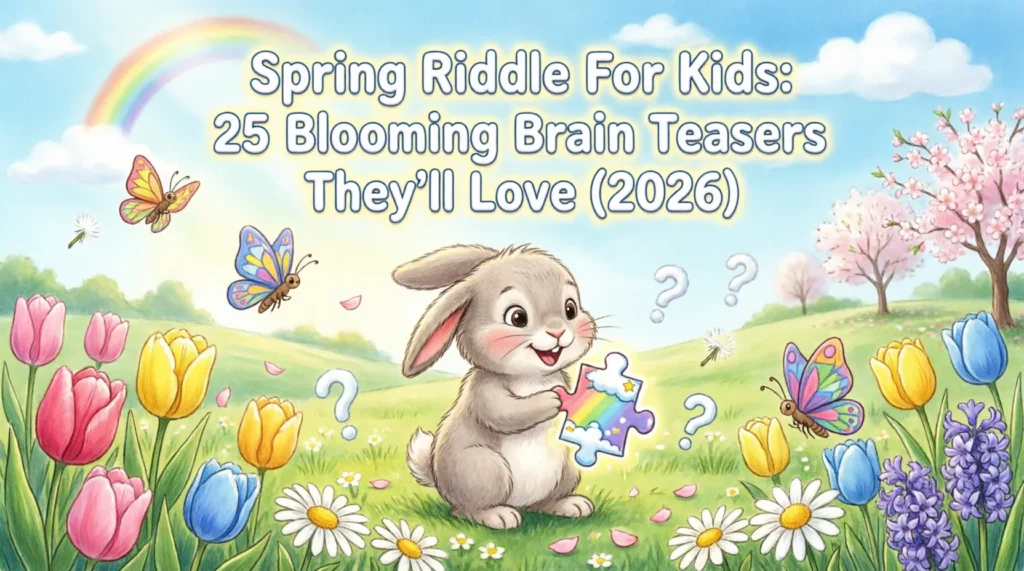
In short, a spring riddle for kids is a fun and educational way to celebrate the season of flowers, sunshine, rain showers, and new beginnings. These kid-friendly riddles encourage creative thinking, laughter, and learning while keeping children entertained at home, in the classroom, or on the go. Scroll down and see how many spring-themed riddles your young puzzlers can solve!
Why Spring Riddle For Kids Are More Powerful Than You Think
Spring is a season full of wonder. Flowers bloom, animals become more active, and children naturally become curious about the world around them. That makes spring-themed riddles a perfect way to turn seasonal excitement into learning opportunities.
Educators and child development researchers often highlight puzzles and riddles as valuable tools for building critical thinking, language skills, and problem-solving abilities. When children hear a riddle, they must listen carefully, connect clues, and think creatively before reaching an answer.
Studies show that playful learning activities can improve memory retention and engagement, especially when they connect to real-world experiences children can observe around them. A spring riddle for kids works especially well because the clues often relate to things children can see outside their windows, in parks, or on nature walks.
Riddles also create moments of connection. Whether you’re a teacher, parent, grandparent, or older sibling, sharing a few spring riddles can spark laughter and conversation while helping children build confidence in their thinking skills.
Riddles are a global tradition found in many cultures, making them a timeless way to bring people together through curiosity and fun.
What Makes a Great Spring Riddle For Kids
A great spring riddle for kids feels challenging without becoming frustrating. Children should have enough clues to make a smart guess, but not so many that the answer becomes obvious immediately.
The best spring riddles use familiar seasonal themes such as flowers, butterflies, birds, rain, gardens, sunshine, and baby animals. Because children already know these topics, they can focus on solving the puzzle rather than trying to understand unfamiliar concepts.
Wordplay is another important ingredient. Kids love discovering that a clue can have more than one meaning. That surprise moment—the famous “aha!” feeling—is what makes riddles memorable and rewarding.
Age-appropriate humor matters too. Young children respond best to lighthearted clues, silly observations, and cheerful surprises. A spring riddle for kids should stay positive, easy to understand, and free from confusing references.
When riddles balance creativity, seasonal themes, and just the right level of challenge, they become much more than a guessing game. They become a fun way for children to practice flexible thinking and observation skills.
Spring Riddle For Kids: 25 Riddles to Try Right Now
Flowers and Gardens
Riddle: I start as a tiny seed in the ground. With sunshine and water, I grow all around. What am I?
Answer: A flower
Riddle: I wear yellow petals and follow the sun all day. What am I?
Answer: A sunflower
Riddle: I’m colorful, smell sweet, and grow in many gardens. Bees love visiting me. What am I?
Answer: A flower
Riddle: I hold soil, seeds, and growing plants, but I’m not a garden. What am I?
Answer: A flower pot
Riddle: I help plants grow, but I don’t have roots. You use me to sprinkle water. What am I?
Answer: A watering can
Riddle: I dig small holes for seeds but never bark. What am I?
Answer: A garden shovel
Riddle: I bloom in spring and often come in bright pink, red, or yellow colors. What am I?
Answer: A tulip
Riddle: I’m green before flowers arrive, and I cover many yards in spring. What am I?
Answer: Grass
Spring Weather
Riddle: I fall from the sky but I’m not snow. Plants cheer when I arrive. What am I?
Answer: Rain
Riddle: After a spring shower, I sometimes paint colors across the sky. What am I?
Answer: A rainbow
Riddle: I shine brighter and stay longer than during winter. What am I?
Answer: The sun
Riddle: I’m made of water droplets floating high above you. What am I?
Answer: A cloud
Riddle: I can make kites dance and leaves flutter. What am I?
Answer: Wind
Riddle: I make puddles appear after a rainy day. What am I?
Answer: Rain
Animals and Nature
Riddle: I start as a caterpillar and later fly with colorful wings. What am I?
Answer: A butterfly
Riddle: I hop through gardens and have long ears. What am I?
Answer: A rabbit
Riddle: I buzz from flower to flower collecting nectar. What am I?
Answer: A bee
Riddle: I build nests in trees and sing cheerful songs each morning. What am I?
Answer: A bird
Riddle: I wiggle through soil and help gardens stay healthy. What am I?
Answer: An earthworm
Riddle: I hatch from an egg and often follow my mother in a line. What am I?
Answer: A duckling
Spring Fun
Riddle: I float on the breeze and need a string to stay close. What am I?
Answer: A kite
Riddle: Children jump in me after rainstorms. What am I?
Answer: A puddle
Riddle: I carry eggs during spring celebrations and can be woven from straw. What am I?
Answer: A basket
Riddle: I grow leaves again after winter and provide shade in summer. What am I?
Answer: A tree
Riddle: I wake up after winter and begin growing leaves and flowers. What season am I?
Answer: Spring
🎯 More spring riddle for kids: Easy, Medium, and Hard Challenges
Easy Riddles for spring riddle for kids (Grades 6–7)
These easy riddles are perfect for grades 6–7 and help build confidence through observation, simple clues, and playful thinking.
Riddle: I arrive after winter, bring colorful flowers, and often make people reach for rain boots. What am I? Answer: Spring
Riddle: I start as a tiny green point and slowly open into something colorful in the sunshine. What am I? Answer: A flower bud
Riddle: I hop across ponds, croak at sunset, and enjoy rainy spring days. What am I? Answer: A frog
Riddle: The more I shine after a spring rain, the faster puddles disappear. What am I? Answer: The sun
Riddle: I hang from a tree branch, but instead of fruit, I become leaves. What am I? Answer: A leaf bud
Riddle: Birds gather bits of grass and twigs to build me before their chicks arrive. What am I? Answer: A nest
Medium Riddles for spring riddle for kids (Grades 7–8)
These medium riddles are best for grades 7–8 and encourage students to connect clues and think through more than one idea.
Riddle: I can cover a field in the morning, disappear by noon, and never need to be swept away. What am I? Answer: Dew
Riddle: I have no paintbrush, but I color hillsides one flower at a time. What am I? Answer: Spring
Riddle: I fall from the sky without being snow, help flowers grow, and sometimes end with a rainbow. What am I? Answer: Rain
Riddle: I begin as a caterpillar before spring is over, but by summer I visit flowers with colorful wings. What am I? Answer: A butterfly
Riddle: The days keep getting longer, but I never stretch myself. What is changing? Answer: The amount of daylight
Riddle: I may look empty in winter, but inside me a new plant is waiting for the right season. What am I? Answer: A seed
Riddle: I travel from flower to flower collecting something sweet while helping plants make more flowers. What am I? Answer: A bee
Hard Riddles for spring riddle for kids (Grade 8 and Up)
These harder riddles are ideal for grade 8 and up, using clever misdirection, patterns, and lateral thinking.
Riddle: Every spring I become smaller without anyone cutting me, even though I’m made of ice. What am I? Answer: A melting snowbank
Riddle: You can hear me before you see me. I announce a storm, but I never bring a single drop of rain myself. What am I? Answer: Thunder
Riddle: I help plants stand tall, yet you cannot see me moving from root to leaf. What am I? Answer: Water traveling through the plant
Riddle: I appear in gardens every year, but no gardener plants me on purpose. What am I? Answer: A weed
Riddle: I can fill the sky with white shapes, yet I never stay the same for long. What am I? Answer: Clouds
Riddle: I make tree branches look alive again, but I never glue on a single leaf. What am I? Answer: Warmer weather
Riddle: I return each year without getting older, and every visit begins a brand-new growing season. What am I? Answer: Spring
Tip for teachers and parents: Start with the easy riddles to build confidence, then gradually introduce medium and hard challenges as students explain their thinking. Mixing difficulty levels encourages teamwork, discussion, and creative problem-solving for learners with different abilities.
📚 Subject-Specific spring riddle for kids: Math, Science, and More
Math Riddles for spring riddle for kids
These math-themed riddles make numbers, shapes, and patterns feel like fun puzzles instead of worksheets.
Riddle: I have four equal sides and four right angles. If you draw me for a garden, every corner matches. What shape am I? Answer: A square
Riddle: I am half of 100, twice as much as 25, and a common classroom milestone. What number am I? Answer: 50
Riddle: I keep growing by adding two each time: 4, 6, 8, 10… What number comes next? Answer: 12
Riddle: You divide 24 flowers equally into 6 vases. How many flowers go into each vase? Answer: 4
Riddle: I have no sides and no corners, but I can roll across the floor. What shape am I? Answer: A circle
Science Riddles for spring riddle for kids
These science riddles introduce everyday biology, earth science, and weather concepts through playful clues.
Riddle: Plants use me along with sunlight and water to make their own food. What gas am I? Answer: Carbon dioxide
Riddle: I change from a liquid into a gas when the sun warms me. What process am I? Answer: Evaporation
Riddle: I carry pollen from one flower to another while searching for nectar. What am I? Answer: A bee
Riddle: I pull everything toward Earth, even falling blossoms and raindrops. What force am I? Answer: Gravity
Riddle: I begin underground, then grow upward into the sunlight while my roots spread below. What am I? Answer: A seedling
Language Riddles for spring riddle for kids
These language riddles strengthen vocabulary, spelling, and wordplay while keeping students smiling.
Riddle: Remove the first letter from the word “bloom,” and what word remains? Answer: Loom
Riddle: Which letter appears twice in the word “letter” but only once in the alphabet’s name? Answer: T
Riddle: I am a word that names a person, place, thing, or idea. What part of speech am I? Answer: A noun
Riddle: What punctuation mark ends a question because it asks for an answer? Answer: A question mark
Riddle: Rearrange the letters in “LISTEN” to make another real word that means quiet. What word is it? Answer: Silent
Ideas for teachers:
Use one subject riddle as a quick warm-up to spark curiosity before introducing a new lesson.
Turn riddles into exit tickets by asking students to solve one and explain their reasoning before leaving class.
Divide the class into small groups and have teams create their own subject-themed riddles to share with classmates.
How to Use Spring Riddle For Kids for Maximum Fun
Use them as classroom warm-up activities before lessons.
Challenge children during car rides to keep everyone entertained.
Turn them into a spring scavenger hunt around the yard or park.
Use them at birthday parties and seasonal celebrations.
Add them to family dinner conversations.
Include them in spring-themed worksheets and learning centers.
You can make the experience even more engaging by encouraging children to explain how they arrived at their answers. This helps strengthen reasoning skills and builds confidence in their thinking.
Another fun idea is to invite kids to create their own spring riddles after solving a few examples. When children become riddle creators, they practice observation, vocabulary, and creativity all at once.
Tips for Sharing Spring Riddle For Kids Without Spoiling the Fun
Give children time to think before revealing the answer. A few extra seconds often leads to better guesses and bigger smiles.
If your child gives an incorrect answer, treat it as part of the game. Ask what clue led them to that guess and encourage another try.
You can also adjust difficulty based on age. Younger children may enjoy more direct clues, while older kids often appreciate trickier wordplay.
Adding dramatic pauses, silly voices, or acting out clues can make even simple riddles feel exciting. The goal is not just solving the puzzle—it’s enjoying the process together.
Bonus: Spring Riddle For Kids That Stump Everyone
These bonus riddles require a little more thinking and observation. They’re perfect when you want to challenge older kids or create a fun family competition.
Riddle: I arrive after winter but before summer. Flowers celebrate when I come. What am I?
Answer: Spring
Riddle: The more flowers I visit, the fuller I become. What am I?
Answer: A bee carrying pollen
Riddle: I have colors but no paintbrush. I appear after rain but cannot be touched. What am I?
Answer: A rainbow
Riddle: I grow on trees but never bloom. Birds often build homes on me. What am I?
Answer: Leaves
Riddle: I wake sleeping gardens without making a sound. What am I?
Answer: Spring sunshine
Riddle: I help seeds travel but have no feet. What am I?
Answer: The wind
Riddle: I arrive in spring and carry tiny drops, but I’m not a rainstorm. What am I?
Answer: Morning dew
FAQs About Spring Riddle For Kids
What age group are spring riddles for kids best suited for?
Most spring riddles work well for children ages 5–12. Younger children enjoy simple clues, while older kids can handle more wordplay and creative thinking challenges.
Can teachers use a spring riddle for kids in the classroom?
Absolutely. Many teachers use spring riddles as morning activities, transition exercises, writing prompts, and discussion starters. They add fun while encouraging critical thinking.
What makes spring riddles different from regular riddles?
Spring riddles focus on seasonal themes such as flowers, rain, sunshine, gardens, insects, and baby animals. They help children connect learning to the world around them during the spring season.
Are spring riddles educational?
Yes. Cognitive scientists and educators frequently point to riddles as useful tools for strengthening vocabulary, memory, reasoning, and problem-solving skills in children.
Can families use spring riddles during outdoor activities?
Definitely. You can use them during walks, picnics, gardening projects, road trips, or nature explorations. Kids often enjoy riddles even more when they can spot clues in the real world.
Final Thoughts: Keep the Fun Going with Spring Riddle For Kids
A spring riddle for kids combines learning, laughter, and seasonal excitement in one simple activity. Whether you’re at home, in a classroom, or exploring the outdoors, riddles help children stay curious about the world around them.
The best part is that you don’t need any special materials or preparation. A few good riddles can instantly create smiles, conversations, and memorable moments.
As children solve more riddles, they strengthen their observation skills, build confidence, and become more comfortable thinking creatively. Those benefits can carry into reading, writing, and everyday problem-solving.
So grab a few riddles, gather some young thinkers, and let spring’s spirit of curiosity bloom one puzzle at a time.
Frequently Asked Questions
What are the benefits of using spring riddles for kids?▼
Spring riddles for kids promote creative thinking, problem-solving, and language skills. They encourage children to connect clues and think critically while having fun, making learning engaging and memorable.
How can educators incorporate spring riddles into their teaching?▼
Educators can use spring riddles during lessons about nature, seasons, or critical thinking. These riddles can serve as icebreakers, discussion starters, or activities that reinforce concepts related to the environment and seasonal changes.
What makes a spring riddle suitable for children?▼
A suitable spring riddle for children uses familiar seasonal themes like flowers and sunshine while being challenging yet not frustrating. It should also incorporate age-appropriate humor and wordplay to keep kids engaged and entertained.
Can spring riddles be used in family activities?▼
Absolutely! Spring riddles are perfect for family gatherings, road trips, or casual playtime, fostering laughter and connection among family members while enhancing children’s thinking skills.
What types of themes are commonly found in spring riddles?▼
Common themes in spring riddles include flowers, butterflies, birds, rain, gardens, sunshine, and baby animals. These relatable topics help children focus on solving the riddles without getting distracted by unfamiliar concepts.
How do spring riddles help with memory retention?▼
Spring riddles engage children in playful learning activities that are linked to real-world experiences, which studies have shown can enhance memory retention. The interactive nature of riddles makes them more memorable compared to traditional learning methods.
Are there specific age groups that benefit more from spring riddles?▼
While spring riddles can be enjoyed by a wide range of ages, young children typically respond best to lighthearted clues and simple concepts. Tailoring the difficulty and humor of the riddles to the age group ensures maximum engagement and enjoyment.
Raj Patel is an engineer turned writer who has a passion for puzzles and logical challenges. Educated at the Indian Institute of Technology, Raj utilized his problem-solving skills in developing themed and hard riddles that challenge adults while remaining clean and family-friendly. His interest in brainteasers began in childhood, inspiring him to create intricate riddles that can entertain and educate simultaneously. At FunRiddleZone, Raj’s contributions are invaluable for adult entertainment and enhancing cognitive skills through fun. He enjoys playing chess and developing mobile puzzle apps in his spare time.