In short, January riddles for kids are fun, winter-themed puzzles that combine learning, laughter, and creative thinking. They’re perfect for classrooms, family game nights, snowy afternoons, and New Year activities. Scroll down and see how many chilly challenges your young puzzlers can solve!
Why January Riddles For Kids Are More Powerful Than You Think
January is a month of fresh starts, chilly weather, and exciting new goals. It’s also the perfect time to challenge young minds with fun puzzles that keep kids engaged while school routines settle back into place.
January riddles for kids do much more than entertain. They encourage children to think creatively, notice details, and explore language in playful ways. Whether you’re a parent, teacher, or caregiver, these riddles can turn ordinary moments into memorable learning experiences.
Educators and child development researchers often highlight the value of puzzles for strengthening problem-solving skills and flexible thinking. Winter-themed riddles add an extra layer of excitement because they connect directly to what kids see and experience during January.
Studies show that children who regularly engage with brain-teasing activities often strengthen memory, vocabulary, and critical-thinking abilities over time. That’s a pretty impressive benefit from something that feels like a game.
Riddles are a global tradition enjoyed across cultures, and January offers countless seasonal themes—from snowflakes and mittens to calendars and New Year’s celebrations—that make them especially fun.
What Makes a Great January Riddle For Kids
A great January riddle for kids strikes the perfect balance between challenge and fun. It shouldn’t be so easy that the answer is obvious immediately, but it also shouldn’t be so difficult that children lose interest.
The best January-themed riddles connect to things kids recognize. Snow, winter clothes, cold weather, ice, hot cocoa, New Year’s resolutions, and the start of a new calendar year all provide familiar and engaging subjects.
Good wordplay is another important ingredient. Kids love discovering that a question can be understood in more than one way. That little surprise creates the satisfying “aha moment” that makes riddles memorable.
Because these riddles are designed for children, clean humor is essential. The goal is to spark curiosity, encourage participation, and build confidence. Every answer should feel rewarding rather than frustrating.
When you choose January riddles for kids, look for puzzles that invite imagination while remaining age-appropriate. The best ones make children smile while giving their brains a healthy workout.
January Riddles For Kids: 20 Riddles to Try Right Now
Winter Weather Riddles
Riddle: I fall from the sky in tiny white pieces, but I’m not rain. What am I?
Answer: Snow.
Riddle: I cover ponds in January and make them slippery and shiny. What am I?
Answer: Ice.
Riddle: The colder I get, the stronger I become beneath your skates. What am I?
Answer: Frozen ice.
Riddle: I arrive with winter winds and can pile up higher than your boots. What am I?
Answer: A snowdrift.
Riddle: I am made of frozen water and hang from rooftops. What am I?
Answer: An icicle.
Riddle: You can catch me on your mitten, but I disappear if you hold me too long. What am I?
Answer: A snowflake.
Riddle: I roar through January trees, but you can never see me. What am I?
Answer: The wind.
New Year Riddles
Riddle: I begin on January 1st and have 12 parts. What am I?
Answer: A year.
Riddle: I help you keep track of birthdays, holidays, and school days. What am I?
Answer: A calendar.
Riddle: People make me in January to improve themselves, but sometimes forget me by spring. What am I?
Answer: A New Year’s resolution.
Riddle: I count from 10 down to 1 before a brand-new year begins. What am I?
Answer: A countdown.
Riddle: The more pages I lose, the closer December gets. What am I?
Answer: A calendar.
Riddle: January is my first chapter. What am I?
Answer: The year.
Cozy January Fun
Riddle: I keep your hands warm when snow is falling outside. What am I?
Answer: Mittens.
Riddle: Kids ride me down snowy hills for winter fun. What am I?
Answer: A sled.
Riddle: I am hot, sweet, and often topped with marshmallows on cold January days. What am I?
Answer: Hot chocolate.
Riddle: I wrap around your neck when winter winds blow. What am I?
Answer: A scarf.
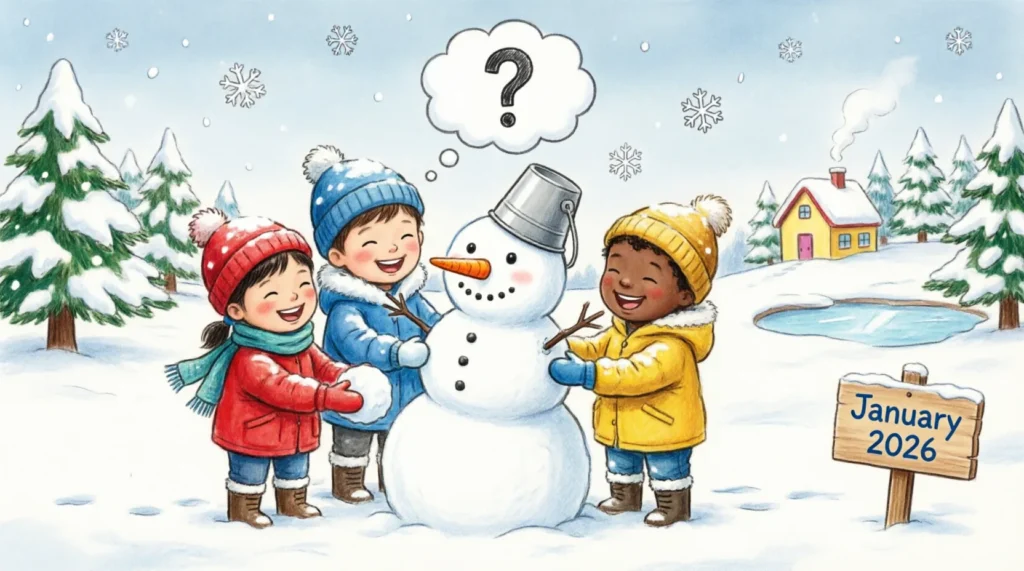
Riddle: You build me with snow, give me a carrot nose, and sometimes a hat. What am I?
Answer: A snowman.
Riddle: I warm your feet in winter and come in pairs. What am I?
Answer: Socks.
Riddle: I crackle and glow while families gather around me on cold evenings. What am I?
Answer: A fireplace.
🎯 More january riddles for kids: Easy, Medium, and Hard Challenges
Easy Riddles for january riddles for kids (Grades 6–7)
These easy challenges are perfect for students in Grades 6–7 who enjoy observation, simple wordplay, and fun seasonal thinking.
Riddle: I arrive with a brand-new calendar but never stay for long. What am I? Answer: January
Riddle: I am often the first thing people write at the top of a fresh page each year. What am I? Answer: The new year
Riddle: The colder I become, the more likely you are to wear me outside. What am I? Answer: A winter coat
Riddle: I sparkle on windows in the morning but disappear when the day warms up. What am I? Answer: Frost
Riddle: I help you remember your goals, but I can’t achieve them for you. What am I? Answer: A resolution
Riddle: I may cover the ground, but I never use a blanket. What am I? Answer: Snow
Medium Riddles for january riddles for kids (Grades 7–8)
These medium riddles are ideal for Grades 7–8 and encourage careful thinking, logic, and connecting clues.
Riddle: I begin the year, have 31 days, and am followed by the shortest month. What am I? Answer: January
Riddle: The more pages you turn, the thinner I become, yet I still keep track of every day. What am I? Answer: A calendar
Riddle: I travel around the world in one night each New Year’s Eve, but I never pack a suitcase. What am I? Answer: Midnight
Riddle: Two friends both make New Year’s resolutions. One keeps every promise by writing them down but never acts. Which friend completed more goals? Answer: Neither—writing them isn’t the same as completing them.
Riddle: I disappear when you step on me but return with the next snowfall. What am I? Answer: Fresh footprints in snow
Riddle: I grow shorter every day in January without losing a single page. What am I? Answer: The amount of winter left until spring
Riddle: You can count me every morning, but you’ll never reach yesterday’s number again. What am I? Answer: Today’s date
Hard Riddles for january riddles for kids (Grade 8 and Up)
These harder riddles are great for Grade 8 and up, using clever misdirection and deeper reasoning.
Riddle: I am always ahead of February but can never catch December. What am I? Answer: January on the calendar
Riddle: A family writes one goal on the first day of January and checks it every Sunday. If January starts on a Thursday, how many Sunday check-ins happen during the month? Answer: Four
Riddle: The colder the weather becomes, the busier I often get, even though I never move. What am I? Answer: A fireplace
Riddle: I can be broken before anyone sees me, especially on January 1. What am I? Answer: A New Year’s resolution
Riddle: I belong to every month, but people notice me most when a new year begins. What am I? Answer: The date
Riddle: I make trees look asleep, yet I quietly prepare them for spring. What am I? Answer: Winter
Riddle: I start empty, fill one square at a time, and end full without getting any bigger. What am I? Answer: A monthly calendar
Using different difficulty levels lets every student experience success before tackling bigger challenges. Teachers and parents can also encourage teamwork by pairing younger or less confident learners with classmates who enjoy solving more advanced riddles.
📚 Subject-Specific january riddles for kids: Math, Science, and More
Math Riddles for january riddles for kids
These math-themed riddles build number sense and logical thinking while keeping learning playful.
Riddle: I have four equal sides and four right angles. What shape am I? Answer: A square
Riddle: I double from 6 to become something greater, but I never change my digits. What am I? Answer: The number 12
Riddle: I am the answer when 8 is divided by 2. What am I? Answer: Four
Riddle: I have no corners, no sides, and I roll instead of slide. What shape am I? Answer: A circle
Riddle: Add me to myself and you get 20. What number am I? Answer: 10
Science Riddles for january riddles for kids
These science riddles introduce everyday concepts from biology, earth science, chemistry, and physics.
Riddle: I change from liquid to solid when temperatures drop, but I’m still made of the same thing. What am I? Answer: Water turning into ice
Riddle: I pull sleds downhill without using hands or ropes. What force am I? Answer: Gravity
Riddle: I help plants make food, even during chilly winter days when the sun shines. What am I? Answer: Sunlight
Riddle: I move through the air but cannot be seen. You only notice me when I make leaves or snow drift. What am I? Answer: Wind
Riddle: I am the gas you breathe in to stay alive, but I have no color or smell. What am I? Answer: Oxygen
Language Riddles for january riddles for kids
These language riddles strengthen vocabulary, spelling, grammar, and creative thinking through wordplay.
Riddle: Remove my first letter from “plane” and I become something simple that explains things. What word am I? Answer: Plain
Riddle: I am a word that names a person, place, or thing. What part of speech am I? Answer: A noun
Riddle: I connect two complete thoughts with words like “and” or “but.” What am I? Answer: A conjunction
Riddle: Rearrange the letters in “silent” to make another common word. What is it? Answer: Listen
Riddle: I always begin a sentence standing tall. What am I? Answer: A capital letter
Use one subject riddle as a daily warm-up to activate prior knowledge before starting a lesson.
Turn riddles into exit tickets by asking students to solve one before leaving class.
Divide students into small groups and let each team create and swap their own subject-themed riddles for classmates to solve.
How to Use January Riddles For Kids for Maximum Fun
Start your classroom morning with a daily January riddle.
Use them during snowy-day indoor activities.
Turn family dinner into a friendly riddle challenge.
Include them in New Year’s parties for kids.
Use them during road trips or errands to keep children engaged.
Create a winter-themed riddle scavenger hunt.
You can also encourage kids to create their own January riddles. When children invent puzzles, they practice creativity, language skills, and logical thinking all at once.
Another great idea is to let children work together in teams. Team guessing encourages cooperation and helps quieter kids participate without feeling pressured. The result is more laughter, more learning, and more memorable January fun.
Tips for Sharing January Riddles For Kids Without Spoiling the Fun
The secret to a great riddle is timing. After reading a riddle, give kids enough time to think before revealing the answer.
If someone guesses incorrectly, encourage them to keep trying. Often the funniest and most creative guesses make the activity even more enjoyable.
You can also adjust difficulty based on age. Younger children may enjoy clues or hints, while older kids often prefer solving riddles independently.
Keep your energy upbeat and enthusiastic. When you act excited about the puzzle, kids naturally become more engaged and eager to participate.
Most importantly, celebrate effort as much as correct answers. The thinking process is where much of the learning happens.
Bonus: January Riddles For Kids That Stump Everyone
These bonus riddles are a little trickier than the main set. They’re perfect for older kids or anyone looking for an extra challenge during the winter season.
Riddle: I am born in clouds, dance through January skies, and disappear in your hand. What am I?
Answer: A snowflake.
Riddle: The more winter coats I wear, the colder I become. What am I?
Answer: An onion outside in winter.
Riddle: I start the year but never finish it. What am I?
Answer: January.
Riddle: You can see me on a frozen pond, but you leave me behind with every step. What am I?
Answer: A footprint.
Riddle: I have numbers from beginning to end, but I am not a math book. What am I?
Answer: A calendar.
Riddle: I travel all winter without moving from my place in the sky. What am I?
Answer: The moon.
Riddle: I can make a hill exciting without changing its shape. What am I?
Answer: Snow.
FAQs About January Riddles For Kids
What age group are January riddles for kids best for?
Most January riddles for kids work well for children ages 5–12. Younger children may enjoy simpler seasonal riddles, while older kids can tackle more challenging wordplay and logic puzzles.
Can teachers use January riddles in the classroom?
Absolutely. January-themed riddles make excellent morning warm-ups, transition activities, writing prompts, and winter lesson starters. They help students focus while keeping learning enjoyable.
What makes January riddles different from regular riddles?
January riddles focus on winter weather, snow activities, New Year’s traditions, and seasonal experiences. This makes them especially relevant and engaging during the first month of the year.
Are January riddles for kids educational?
Yes. Cognitive scientists and educators frequently note that riddles can support vocabulary growth, reasoning skills, memory, and creative thinking. Children often learn while having fun without even realizing it.
How can families use January riddles at home?
You can share them during meals, car rides, family game nights, or cozy winter evenings. Many families enjoy making a daily January riddle part of their routine throughout the month.
Final Thoughts: Keep the Fun Going with January Riddles For Kids
January brings a unique mix of fresh beginnings, chilly adventures, and opportunities for learning. That’s exactly why January riddles for kids fit so naturally into this time of year.
Whether you’re teaching a classroom, entertaining children at home, or looking for a fun winter activity, these riddles offer an easy way to spark curiosity and conversation.
The more often you use riddles, the more comfortable children become with creative thinking and problem-solving. Over time, those small moments of puzzling and guessing can build confidence along with plenty of laughter.
So grab a cup of hot cocoa, gather your young thinkers, and see where the next riddle leads—because every great January starts with a little wonder.
Frequently Asked Questions
What are January riddles for kids?▼
January riddles for kids are fun, winter-themed puzzles designed to engage children’s creativity and problem-solving skills. They can be used in classrooms, during family game nights, or as playful activities on snowy afternoons.
How do January riddles benefit children's learning?▼
These riddles encourage kids to think creatively, notice details, and explore language in a playful manner. Engaging with brain-teasing activities like these can strengthen memory, vocabulary, and critical-thinking abilities over time.
What themes do January riddles typically include?▼
January riddles often revolve around winter themes such as snowflakes, cold weather, ice, and New Year’s celebrations. This connection to familiar experiences makes the riddles more engaging and relatable for children.
What makes a great riddle for kids in January?▼
A great January riddle strikes a balance between challenge and fun, ensuring it’s neither too easy nor frustratingly difficult. It should also incorporate familiar winter elements and clean humor to spark curiosity and participation.
Can teachers use these riddles in the classroom?▼
Absolutely! January riddles can be an excellent tool for educators to promote problem-solving skills and flexible thinking while making learning enjoyable. They can be integrated into lessons or used as fun breaks during winter months.
How many riddles are included in the article?▼
The article features a collection of 20 January riddles for kids, categorized into winter weather riddles and New Year riddles. Each riddle is designed to engage young minds and provide a fun challenge.
What age group are these riddles suitable for?▼
The January riddles are designed for children, making them appropriate for various age groups, particularly those in elementary school. They invite imagination while remaining age-appropriate, ensuring a rewarding experience for young puzzlers.
Ethan is a puzzle enthusiast and lead writer at FunRiddlezone.com, where he focuses on creating and breaking down riddles that challenge the mind while keeping things fun and engaging. He specializes in turning tricky questions, wordplay, and logic puzzles into clear, satisfying explanations that actually make sense — not confusing or overcomplicated answers.
Drawing from logic, pattern recognition, and creative thinking, Ethan approaches riddles as mental exercises designed to sharpen thinking skills and spark curiosity. Instead of treating riddles as random tricks, he explains the reasoning behind each one, helping readers understand how to think through problems step by step.
He pays close attention to wording, hidden clues, and subtle misdirection — the key elements that make riddles both challenging and enjoyable. From classic brain teasers to tricky modern riddles, Ethan ensures that every puzzle is not just solved, but fully understood.
At FunRiddlezone.com, his mission is simple: make riddles more than just questions — turn them into a fun way to train your brain. He doesn’t just give answers — he helps readers think sharper, spot patterns faster, and enjoy the process of solving.