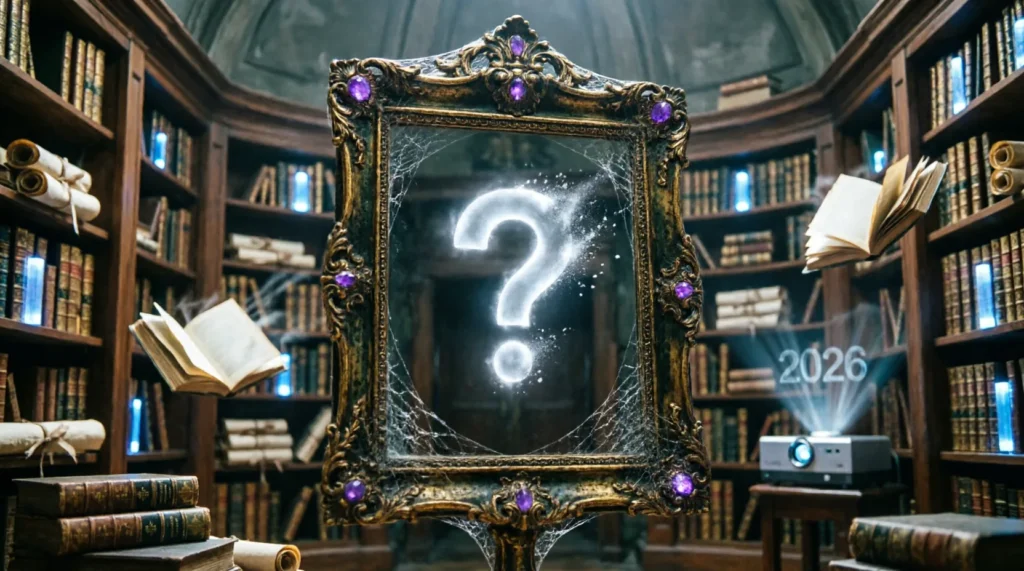
In short, a riddle for mirror is a clever brain teaser built around reflections, appearances, and the surprising ways mirrors interact with the world. These riddles are perfect for kids, adults, classrooms, parties, and anyone who enjoys a quick mental challenge. Scroll down and see how many mirror-themed riddles you can solve before checking the answers.
Why Riddle For Mirror Are More Powerful Than You Think
Mirror riddles do more than entertain. They challenge you to look beyond what seems obvious and think from a different angle, which is exactly what great puzzles are designed to do.
Researchers who study problem-solving often note that riddles encourage flexible thinking. A mirror-themed riddle is especially effective because it naturally plays with perspective, reflection, symmetry, and visual assumptions.
Studies show that puzzle-solving activities can improve attention, memory, and reasoning skills. When you tackle a riddle for mirror, you are training your brain to question first impressions and search for hidden meaning.
Riddles are also a global tradition. Across cultures and generations, people have used clever questions and playful mysteries to spark laughter, conversation, and learning.
What Makes a Great Riddle For Mirror
A great mirror riddle creates a small moment of confusion before revealing a satisfying answer. The best ones make you think about reflection in a new way.
Difficulty matters. If a mirror riddle is too easy, the surprise disappears. If it is too hard, the fun fades. The sweet spot is a challenge that makes you pause for a few seconds before everything suddenly clicks.
Wordplay is another important ingredient. Since mirrors reverse images, reflect light, and show appearances, they create endless opportunities for clever twists. A strong riddle for mirror often encourages you to think literally when the answer is metaphorical—or vice versa.
The most memorable riddles deliver an “aha moment.” You spend time considering complicated possibilities only to discover that the answer was hiding in plain sight. That feeling of discovery keeps people coming back for more.
Mirror riddles also work well because they are clean, family-friendly, and suitable for almost any setting. Whether you are sharing them with friends, students, coworkers, or family members, they offer a fun challenge without needing complicated rules.
Riddle For Mirror: 20 Riddles to Try Right Now
Classic Reflection Riddles
Riddle: I copy everything you do, but I never make a sound. What am I?
Answer: A mirror.
Riddle: The closer you come to me, the closer I come to you. Yet we never touch. What am I?
Answer: Your reflection in a mirror.
Riddle: I have a face but no feelings, and I show your face without stealing it. What am I?
Answer: A mirror.
Riddle: I tell no lies, yet I sometimes make people uncomfortable. What am I?
Answer: A mirror.
Riddle: You look into me to see yourself, but I can never see me. What am I?
Answer: A mirror.
Riddle: I am full of people all day long, yet nobody lives inside me. What am I?
Answer: A mirror.
Riddle: I follow your movements instantly, but I never take a single step. What am I?
Answer: A reflection.
Wordplay and Perspective Riddles
Riddle: I always answer your stare, but I never start the conversation. What am I?
Answer: A mirror.
Riddle: I can double a room without building a single wall. What am I?
Answer: A mirror.
Riddle: I can make one candle look like two. What am I?
Answer: A mirror.
Riddle: I show your left hand as right and your right hand as left. What am I?
Answer: A mirror.
Riddle: I never forget your appearance, but I remember it for only a second. What am I?
Answer: A mirror.
Riddle: I reveal what stands before me, but I hide everything behind me. What am I?
Answer: A mirror.
Everyday Mirror Mysteries
Riddle: You visit me before a haircut, before a speech, and before a photo. What am I?
Answer: A mirror.
Riddle: I live in bathrooms, bedrooms, and stores, helping people prepare for the day. What am I?
Answer: A mirror.
Riddle: The dirtier I become, the less clearly you can see yourself. What am I?
Answer: A mirror.
Riddle: I shine brightest when clean, but I create no light of my own. What am I?
Answer: A mirror.
Riddle: I can make a tiny room seem larger than it really is. What am I?
Answer: A mirror.
Creative Mirror Challenges
Riddle: I am a window that never opens, yet I show a whole world. What am I?
Answer: A mirror.
Riddle: I am a silent artist who redraws your image every second. What am I?
Answer: A mirror.
🎯 More riddle for mirror: Easy, Medium, and Hard Challenges
Easy Riddles for riddle for mirror (Grades 6–7)
These easy riddles are perfect for students in Grades 6–7 who enjoy simple observations and playful thinking.
Riddle: I copy every smile you make, but I never laugh first. What am I? Answer: A mirror
Riddle: I can wear your hat without owning one. What am I? Answer: Your reflection in a mirror
Riddle: I show two eyes when you have two eyes, and one wink when you wink. What am I? Answer: A mirror
Riddle: I never borrow your clothes, but I always seem to wear them. What am I? Answer: Your reflection
Riddle: You stand in front of me every morning, but I never step aside. What am I? Answer: A bathroom mirror
Riddle: I know if you’ve brushed your hair without saying a word. What am I? Answer: A mirror
Medium Riddles for riddle for mirror (Grades 7–8)
These medium-level riddles are best for Grades 7–8 students ready to use logic and careful observation.
Riddle: I turn your right hand into my left, yet I never move either one. What am I? Answer: A mirror image
Riddle: The more light I receive, the more clearly I speak without words. What am I? Answer: A mirror
Riddle: I can double a room without building a single wall. What am I? Answer: A mirror
Riddle: I am honest when you’re happy and honest when you’re sad. I never choose which face to show. What am I? Answer: A mirror
Riddle: I disappear when the room goes dark, though I never leave my place. What am I? Answer: Your reflection in a mirror
Riddle: I can help an artist draw a face they’ve never truly seen—their own. What am I? Answer: A mirror
Riddle: I never blink, yet I watch thousands of expressions. What am I? Answer: A mirror
Hard Riddles for riddle for mirror (Grade 8 and Up)
These challenging riddles are ideal for Grade 8 and up, inviting abstract thinking and clever reasoning.
Riddle: I tell the truth backward without changing a single fact. What am I? Answer: A mirror reflection
Riddle: I can make one candle look like two, though I create nothing at all. What am I? Answer: A mirror
Riddle: I borrow every face I show and return it unchanged moments later. What am I? Answer: A mirror
Riddle: I have no memory, yet I’ve seen your face more times than most people have. What am I? Answer: A mirror
Riddle: When you walk away, I vanish without moving an inch. What am I? Answer: Your reflection in a mirror
Riddle: I am both window and wall—a surface that reveals without allowing passage. What am I? Answer: A mirror
Riddle: Two people stand before me. I become four faces but remain only one object. What am I? Answer: A mirror
Teachers and parents can start with easy riddles to build confidence before introducing more complex challenges. Mixing difficulty levels also makes it easy to support different learners during classroom games or family activities.
📚 Subject-Specific riddle for mirror: Math, Science, and More
Math Riddles for riddle for mirror
These math-themed riddles bring numbers, patterns, and shapes into the fun.
Riddle: I am a shape with four equal sides that often holds your reflection on the wall. What am I? Answer: A square mirror
Riddle: I double every object I show. If three apples stand before me, how many apples do you appear to see? Answer: Six apples
Riddle: I am a line that helps explain how reflections work in geometry. What am I? Answer: A line of symmetry
Riddle: Fold a paper heart down its middle, and both sides match. What mathematical idea does this show? Answer: Symmetry
Riddle: I stay the same distance from your face no matter which side of me you measure. What property makes flat mirrors useful in math diagrams? Answer: Reflection symmetry
Science Riddles for riddle for mirror
These science riddles explore light, reflection, and the natural world in simple, engaging ways.
Riddle: I bounce from surfaces so you can see yourself smiling. What am I? Answer: Light
Riddle: I travel incredibly fast and help mirrors do their job every day. What am I? Answer: Light waves
Riddle: I am the process that happens when light strikes a mirror and changes direction. What am I? Answer: Reflection
Riddle: I am made from water droplets and sunlight and sometimes look like nature’s giant mirror of colors. What am I? Answer: A rainbow
Riddle: I appear on still lakes when the wind rests and the surface becomes smooth enough to copy the sky. What am I? Answer: A reflection
Language Riddles for riddle for mirror
These language riddles encourage students to play with letters, meanings, and word patterns.
Riddle: Read me the same from left to right and right to left: LEVEL. What kind of word am I? Answer: A palindrome
Riddle: I am the word that means “to look back at something thoughtfully.” I sound perfect for mirrors and memories alike. What am I? Answer: Reflect
Riddle: Remove the first letter from the word “glass,” and I become something that grows in a field. What am I? Answer: Grass
Riddle: I am a phrase that compares one thing to another using “like” or “as.” Writers often use me to describe reflections. What am I? Answer: A simile
Riddle: Which word belongs with mirror, echo, and shadow because all three can imitate something else? Answer: Reflection
Teachers can incorporate subject riddles into lessons by:
Using one riddle as a warm-up activity before introducing a new topic.
Assigning riddles as exit tickets to review key concepts in a fun way.
Organizing small-group challenges where students explain not only the answer but also the reasoning behind it.
How to Use Riddle For Mirror for Maximum Fun
Start family game nights with a mirror riddle challenge.
Use them as classroom brain warmups before lessons.
Add them to party games and trivia contests.
Share one during a road trip to keep everyone engaged.
Use them as icebreakers during group activities.
Challenge friends to solve them without hints.
You can make these riddles even more enjoyable by asking people to explain their reasoning before revealing the answer. Sometimes the guesses are more entertaining than the solution itself.
If you are working with younger children, start with straightforward reflection riddles before introducing trickier wordplay. For older players, encourage them to create their own mirror-themed puzzles once they solve a few examples.
Tips for Sharing Riddle For Mirror Without Spoiling the Fun
Give people enough time to think. A few moments of silence often lead to the most satisfying discoveries.
Avoid revealing hints too quickly. When you let someone work through the puzzle independently, the answer feels more rewarding.
If a guess is wrong, encourage another attempt rather than immediately giving away the solution. You can ask questions like, “What does a mirror do?” or “What happens when you stand in front of one?”
You should also adjust the difficulty based on your audience. Younger children usually enjoy direct reflection clues, while adults often appreciate misdirection and clever wordplay.
Most importantly, keep the mood light. The goal is curiosity, laughter, and a memorable challenge.
Bonus: Riddle For Mirror That Stump Everyone
These bonus riddles are a little trickier because they focus on perspective, logic, and unexpected interpretations of reflection.
Riddle: I am broken many times each day, yet I never crack. What am I?
Answer: A reflection disturbed by movement.
Riddle: I disappear when darkness arrives, even though I never leave my place. What am I?
Answer: A reflection in a mirror.
Riddle: I show reality while creating an illusion. What am I?
Answer: A mirror.
Riddle: I can face thousands of people in a year without remembering a single one. What am I?
Answer: A mirror.
Riddle: I make duplicates without copying anything. What am I?
Answer: A mirror.
Riddle: I am honest enough to reveal every detail, yet people often blame me for what they see. What am I?
Answer: A mirror.
Riddle: The more people stand before me, the more people appear, yet nobody enters. What am I?
Answer: A mirror.
FAQs About Riddle For Mirror
What makes a mirror riddle different from regular riddles?
A mirror riddle focuses on reflections, appearances, perspective, and visual thinking. These themes naturally create clever twists that challenge your assumptions and encourage creative reasoning.
Are mirror riddles suitable for kids?
Yes. Most mirror-themed riddles are family-friendly and easy to adapt for different age groups. You can choose simple reflection-based puzzles for younger children and more complex wordplay for older kids.
Can I use a riddle for mirror in the classroom?
Absolutely. Educators often use riddles to encourage critical thinking and discussion. Mirror riddles are especially useful because they connect to observation, science, perception, and creative language skills.
Why are mirror riddles so satisfying to solve?
The answer usually feels obvious once you know it, yet it remains hidden at first. Cognitive scientists often point to this sudden shift in understanding as one reason puzzles feel rewarding.
How can I create my own mirror riddles?
Start by listing things a mirror does: reflect, reverse, reveal, duplicate, and follow movement. Then build clues around those ideas while hiding the answer behind creative wording and misdirection.
Final Thoughts: Keep the Fun Going with Riddle For Mirror
Mirror riddles are simple on the surface, yet they offer surprising depth. They encourage you to think differently, challenge assumptions, and enjoy the process of discovery.
Whether you are entertaining friends, teaching students, or simply looking for a quick mental workout, a good riddle for mirror can turn an ordinary moment into something memorable.
The more often you solve riddles, the better you become at spotting patterns, recognizing clues, and thinking creatively. Those skills carry far beyond puzzle-solving and into everyday life.
So stand in front of a mirror, share a riddle, and see whether the next reflection staring back at you is a puzzled face—or a victorious smile.
Frequently Asked Questions
What are some benefits of solving mirror-themed riddles?▼
Solving mirror-themed riddles enhances cognitive skills such as attention, memory, and reasoning. These riddles encourage flexible thinking and challenge individuals to look beyond first impressions, promoting a deeper understanding of perspective and reflection.
Why are mirror riddles suitable for various audiences?▼
Mirror riddles are clean, family-friendly, and can be enjoyed by people of all ages, making them perfect for classrooms, parties, and gatherings. They provide an engaging challenge without needing complicated rules, fostering fun and conversation.
What makes a great mirror riddle?▼
A great mirror riddle creates a moment of confusion before delivering a satisfying answer, balancing difficulty to provide just the right challenge. It often incorporates clever wordplay and encourages thinking from different angles, leading to memorable ‘aha moments’.
How can I use mirror riddles in educational settings?▼
Mirror riddles can be used in educational settings to stimulate critical thinking and problem-solving skills among students. They serve as engaging tools for discussions about perspective, reflection, and the nature of assumptions.
Can you provide examples of classic mirror riddles?▼
Yes, some classic mirror riddles include: ‘I copy everything you do, but I never make a sound. What am I?’ Answer: A mirror. Another is ‘The closer you come to me, the closer I come to you. Yet we never touch. What am I?’ Answer: Your reflection in a mirror.
What role does wordplay play in mirror riddles?▼
Wordplay is crucial in mirror riddles as it creates clever twists that challenge the solver’s thinking. Since mirrors reverse images and play with appearances, they offer endless opportunities for metaphors and literal interpretations.
How do mirror riddles differ from other types of riddles?▼
Mirror riddles specifically focus on themes of reflection, symmetry, and visual perception, setting them apart from other riddles. They engage solvers in unique ways by prompting them to reconsider what they see and how they interpret it.
What is the classic riddle answer for a mirror?
The most common version asks: ‘What can you catch but not throw?’ or ‘I show you the world but I am not a window, I copy your every move but I am not a shadow. What am I?’ The answer to both is a mirror — it reflects rather than creates.
Why are mirror riddles popular with kids and in classrooms?
Mirror riddles teach a simple but memorable concept — reflection versus reality — using everyday language kids already understand. Teachers often use them as quick warm-up puzzles because the ‘aha’ moment happens fast and every student can picture a mirror in their own home.
Are there harder riddles about mirrors for older kids or adults?
Yes. Riddles that involve mirror symmetry, reversed text, or ‘what looks the same backwards and forwards’ add a layer of wordplay that works well for older kids, trivia nights, or party games where you want something trickier than the classic version.
Liam Nguyen is a seasoned educational consultant with over 15 years of experience in developing engaging content for classrooms across the globe. Holding a degree in Education from the University of Melbourne, Liam has dedicated his career to making learning fun and accessible for students of all ages. His passion for wordplay and critical thinking led him to specialize in writing challenging yet entertaining riddles. At FunRiddleZone, he creates hard and themed riddles that stimulate young minds and serve as great icebreakers for teachers. Outside of riddles, Liam enjoys hiking and exploring local trivia competitions.