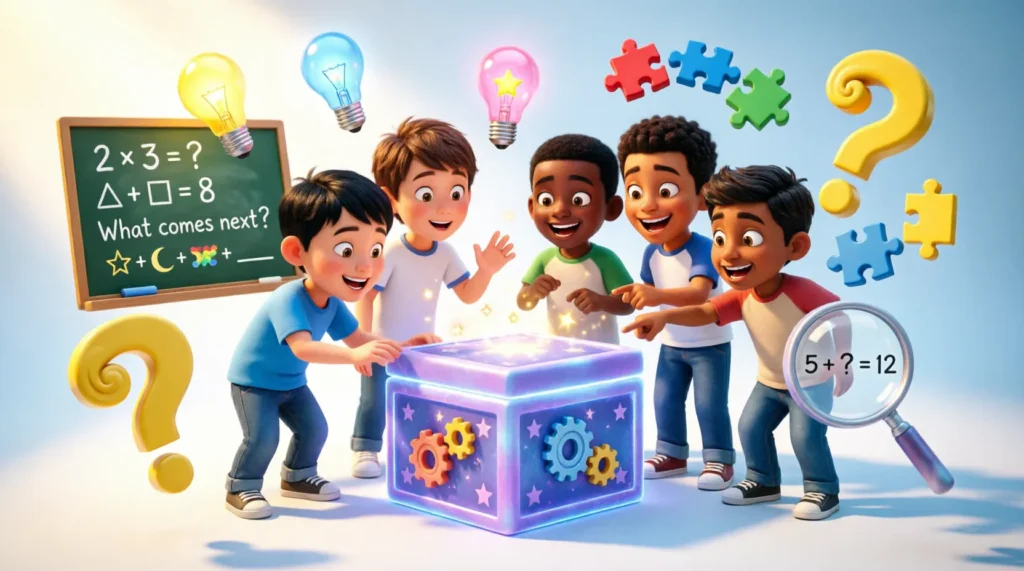
In short, riddles for 5th graders are fun, age-appropriate puzzles that challenge critical thinking, creativity, and problem-solving skills. They’re perfect for classrooms, family game nights, road trips, and anytime kids want a brain-boosting challenge. Scroll down to test your skills and see how many you can solve!
Why the Riddles For 5th Graders Are More Powerful Than You Think
Riddles are much more than simple jokes with answers. For 5th graders, they provide an exciting way to practice reasoning, vocabulary, and creative thinking without feeling like schoolwork.
Educators often use riddles because they encourage students to slow down, look for clues, and think from different perspectives. When kids solve a riddle, they experience a rewarding “aha!” moment that builds confidence and curiosity.
Child development researchers and cognitive scientists have long noted that puzzle-based activities help strengthen memory, language processing, and problem-solving abilities. Studies show that children who regularly engage in word games and brain teasers often improve critical-thinking skills while having fun.
One reason riddles for 5th graders work so well is that they combine learning and laughter. Kids stay engaged because every riddle feels like a mini mystery waiting to be solved.
Riddles are also part of a global tradition. Across cultures, families and teachers have used clever questions and puzzles to entertain, teach, and inspire young minds for generations.
What Makes a Great Riddles For 5th Graders
The best riddles for 5th graders strike a balance between challenge and accessibility. They should be tricky enough to make kids think but not so difficult that they become frustrating.
Great riddles often use wordplay, unexpected twists, or clever observations about everyday life. A student might think the answer is obvious at first, only to discover that the real solution requires looking at the question differently.
The most satisfying riddles create a strong “aha moment.” That’s the instant when everything suddenly makes sense and the answer feels both surprising and obvious at the same time.
For this age group, clean humor is important. The best riddles avoid inappropriate themes and instead focus on school, animals, nature, numbers, science, sports, and everyday experiences that kids can easily relate to.
When you choose riddles for 5th graders, you’re looking for puzzles that encourage curiosity, spark conversation, and make learning feel like an adventure.
Riddles For 5th Graders: 30 Riddles to Try Right Now
School and Learning Riddles
Riddle: I have many pages but I’m not a website. I help you learn but never take a test. What am I?
Answer: A textbook
Riddle: The more you write on me, the smaller I become. What am I?
Answer: A pencil
Riddle: I travel from desk to desk but never walk. Students pass me around during class. What am I?
Answer: A note
Riddle: I have numbers, symbols, and buttons, but I’m not a phone. What am I?
Answer: A calculator
Riddle: Every student wants me to arrive quickly, but every teacher wants me to last longer. What am I?
Answer: Recess
Riddle: I can be full of answers but still ask questions. What am I?
Answer: A worksheet
Riddle: I help tell time at school, yet I never wear a watch. What am I?
Answer: The classroom clock
Riddle: I get sharper the more I work, but only if someone helps me. What am I?
Answer: A pencil tip
Nature and Animal Riddles
Riddle: I dance in the sky after rain but cannot sing. What am I?
Answer: A rainbow
Riddle: I carry my house wherever I go, but I never pay rent. What am I?
Answer: A snail
Riddle: I have branches but no leaves, no bark, and no roots. What am I?
Answer: A river
Riddle: I wake up with the sun and disappear at night. What am I?
Answer: A shadow
Riddle: I can jump higher than a house because houses can’t jump. What am I?
Answer: Any jumping animal
Riddle: I wear black and white every day but never change outfits. What am I?
Answer: A zebra
Riddle: I fall from clouds but never get hurt. What am I?
Answer: Rain
Riddle: I have wings but spend most of my time walking. What am I?
Answer: A chicken
Riddle: I grow taller every year but never move from my spot. What am I?
Answer: A tree
Riddle: I buzz near flowers but don’t play music. What am I?
Answer: A bee
Numbers, Logic, and Fun Thinking Riddles
Riddle: What gets bigger every time you take something away from it?
Answer: A hole
Riddle: If two’s company and three’s a crowd, what are four and five?
Answer: Nine
Riddle: I have one head, one foot, and four legs. What am I?
Answer: A bed
Riddle: What can go up but never come down?
Answer: Your age
Riddle: What belongs to you but other people use more often?
Answer: Your name
Riddle: I have keys but open no doors. What am I?
Answer: A piano
Riddle: What can you catch but never throw?
Answer: A cold
Riddle: The more you share me, the less you have. What am I?
Answer: A secret
Riddle: I can run but never walk. What am I?
Answer: Water
Riddle: What has many teeth but cannot bite?
Answer: A comb
Riddle: I have hands but cannot clap. What am I?
Answer: A clock
Riddle: What comes once in a minute, twice in a moment, and never in an hour?
Answer: The letter M
How to Use the Riddles For 5th Graders for Maximum Fun
Start your classroom day with a riddle challenge.
Use one riddle during family dinners to spark conversation.
Turn road trips into puzzle competitions.
Create a weekly riddle contest among friends.
Use riddles as brain breaks between homework assignments.
Let students create their own riddles after solving a few examples.
You can make the experience even more engaging by giving everyone time to think before allowing guesses. This helps kids practice patience and reasoning instead of blurting out answers immediately.
Many teachers find that riddles for 5th graders work especially well as warm-up activities. They grab attention quickly and get students thinking before a lesson begins.
Parents can also use riddles to encourage conversation. A simple riddle during a car ride can lead to laughter, teamwork, and memorable family moments.
Tips for Sharing the Riddles For 5th Graders Without Spoiling the Fun
Give kids enough time to think before revealing the answer. The challenge is where most of the fun happens.
If someone guesses incorrectly, encourage them to explain their reasoning. You might discover creative thinking that deserves praise even if the answer isn’t correct.
Start with easier riddles and gradually increase the difficulty. This helps build confidence and keeps everyone engaged.
Use clues only when needed. A small hint can help kids reach the answer themselves, making the solution feel more rewarding.
Most importantly, celebrate effort as much as success. When you make riddles enjoyable rather than competitive, kids stay excited to solve more.
Bonus: Riddles For 5th Graders That Stump Everyone
These bonus riddles are a little trickier and often require kids to think beyond the obvious answer. They’re perfect when you’re ready for an extra challenge.
Riddle: I get wetter the more I dry. What am I?
Answer: A towel
Riddle: You can hold me without touching me. What am I?
Answer: Your breath
Riddle: I start tall, but the more I work, the shorter I become. What am I?
Answer: A candle
Riddle: I have cities but no people, rivers but no water, and roads but no cars. What am I?
Answer: A map
Riddle: What has four eyes but cannot see?
Answer: Mississippi
Riddle: What comes before thunder but after lightning?
Answer: The letter N
Riddle: I am easy to lift but hard to throw. What am I?
Answer: A feather
Riddle: The more you learn about me, the bigger I seem. What am I?
Answer: Knowledge
FAQs About the Riddles For 5th Graders
What age group are riddles for 5th graders best for?
Most are ideal for children between 10 and 11 years old. However, younger students who enjoy puzzles and older students who like quick brain teasers can enjoy them too.
How difficult should riddles for 5th graders be?
They should be challenging enough to encourage thinking but not so difficult that kids lose interest. The best riddles usually take anywhere from a few seconds to a couple of minutes to solve.
Can teachers use riddles for 5th graders in the classroom?
Absolutely. Many educators use riddles as warm-up activities, critical-thinking exercises, writing prompts, or fun rewards. They can easily fit into language arts, science, and math lessons.
What skills do riddles help develop in 5th graders?
Riddles support logical reasoning, vocabulary development, reading comprehension, creativity, and problem-solving. Child development researchers also note that puzzle-solving can strengthen memory and flexible thinking.
How often should kids practice riddles?
A few riddles each day can be beneficial. Even five minutes of puzzle-solving gives kids an opportunity to exercise their brains while enjoying a fun challenge.
Final Thoughts: Keep the Fun Going with the Riddles For 5th Graders
The best riddles for 5th graders do more than entertain. They encourage kids to think creatively, explore language, and develop confidence in their problem-solving abilities.
Whether you’re a teacher planning a classroom activity, a parent looking for road-trip entertainment, or a student who loves a challenge, these riddles offer something for everyone.
The more regularly you use riddles, the more naturally critical thinking becomes part of everyday life. Small moments of curiosity can lead to stronger reasoning skills and plenty of laughs along the way.
So pick a riddle, share it with someone nearby, and watch how quickly a simple question turns into a memorable adventure for the mind.
Ethan is a puzzle enthusiast and lead writer at FunRiddlezone.com, where he focuses on creating and breaking down riddles that challenge the mind while keeping things fun and engaging. He specializes in turning tricky questions, wordplay, and logic puzzles into clear, satisfying explanations that actually make sense — not confusing or overcomplicated answers.
Drawing from logic, pattern recognition, and creative thinking, Ethan approaches riddles as mental exercises designed to sharpen thinking skills and spark curiosity. Instead of treating riddles as random tricks, he explains the reasoning behind each one, helping readers understand how to think through problems step by step.
He pays close attention to wording, hidden clues, and subtle misdirection — the key elements that make riddles both challenging and enjoyable. From classic brain teasers to tricky modern riddles, Ethan ensures that every puzzle is not just solved, but fully understood.
At FunRiddlezone.com, his mission is simple: make riddles more than just questions — turn them into a fun way to train your brain. He doesn’t just give answers — he helps readers think sharper, spot patterns faster, and enjoy the process of solving.