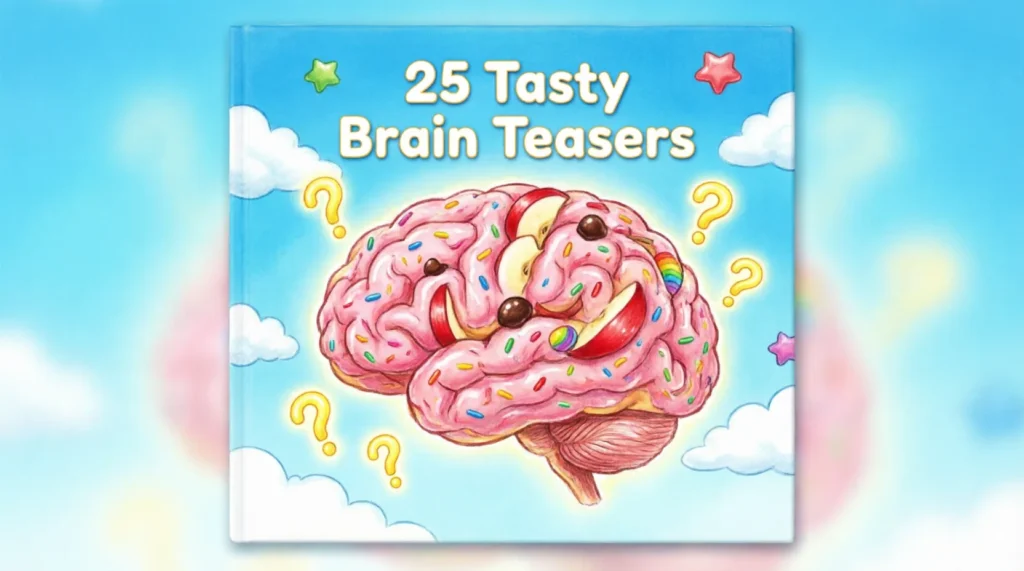
In short, food riddles for kids are fun, family-friendly puzzles that combine laughter, learning, and imagination. They’re perfect for classrooms, road trips, parties, lunch breaks, and family game nights. Scroll down and see how many delicious riddles your young puzzlers can solve!
Why Food Riddles For Kids Are More Powerful Than You Think
Food is something every child recognizes, which makes it a perfect theme for riddles. When you combine familiar foods with playful clues, you create an activity that feels like a game while secretly building important thinking skills.
Educators and child development researchers often point to riddles as a simple way to strengthen vocabulary, reasoning, memory, and creative problem-solving. Because food is already part of a child’s daily life, kids can connect new ideas to things they already know.
Studies show that children learn and remember information more easily when learning includes humor, curiosity, and active participation. That’s exactly why food riddles for kids work so well in classrooms, homes, and group activities.
Riddles are also a global tradition. Across many cultures, families have used playful word games and puzzles to entertain children while helping them think in new ways.
When you share a food riddle, you’re doing more than filling time. You’re helping kids practice observation, logic, and language skills while having fun.
What Makes a Great Food Riddle For Kids
A great food riddle for kids should be challenging enough to spark curiosity but simple enough that children can eventually figure it out. The best riddles create a small mystery that leads to a satisfying “aha!” moment.
Food-themed riddles work especially well because they use familiar objects. Kids know what apples, bananas, popcorn, and pizza look like, so they can focus on solving the clue instead of learning unfamiliar concepts.
Wordplay is another important ingredient. A clever hint about color, shape, texture, or how a food is eaten can make a riddle memorable without making it frustrating.
For children, clean and age-appropriate humor matters. The goal is to encourage confidence and curiosity, not confusion. That’s why the strongest food riddles for kids use simple language, playful surprises, and answers that make kids smile.
When you find the right balance between challenge and fun, even a short riddle can become the highlight of a classroom activity or family gathering.
Food Riddles For Kids: 25 Riddles to Try Right Now
Fruit Riddles
Riddle: I’m red or green and grow on a tree. Teachers are often given me. What am I?
Answer: An apple
Riddle: I’m yellow outside and white inside. Monkeys love me. What am I?
Answer: A banana
Riddle: I wear a crown but I’m not a king. My outside is rough, but inside I’m sweet. What am I?
Answer: A pineapple
Riddle: I’m small, purple, and grow in bunches. What am I?
Answer: Grapes
Riddle: I’m orange in color and share my name with my fruit. What am I?
Answer: An orange
Riddle: I have tiny seeds on my outside instead of inside. What am I?
Answer: A strawberry
Riddle: Cut me open and you’ll find many juicy jewels. What fruit am I?
Answer: A pomegranate
Riddle: I’m green on the outside, red on the inside, and full of black seeds. What am I?
Answer: A watermelon
Snack and Treat Riddles
Riddle: I pop when I’m heated and often visit movie theaters. What am I?
Answer: Popcorn
Riddle: I’m cold, sweet, and come in many flavors. What am I?
Answer: Ice cream
Riddle: I’m crunchy, salty, and come in a bag. What am I?
Answer: Potato chips
Riddle: I’m made from cocoa and often given as a treat. What am I?
Answer: Chocolate
Riddle: I’m twisted, salty, and shaped like a knot. What am I?
Answer: A pretzel
Riddle: I can be gummy, chewy, or hard, and kids often find me in colorful wrappers. What am I?
Answer: Candy
Riddle: I’m round with a hole in the middle and often eaten for breakfast. What am I?
Answer: A doughnut
Riddle: I’m baked, sweet, and often topped with frosting on birthdays. What am I?
Answer: A cupcake
Mealtime Food Riddles
Riddle: I have a crust, sauce, and cheese, and people often share me in slices. What am I?
Answer: Pizza
Riddle: I’m made with bread and have something tasty in the middle. What am I?
Answer: A sandwich
Riddle: I swim in a bowl but I’m not a fish. What am I?
Answer: Soup
Riddle: I start as kernels and become a breakfast favorite when cooked with milk. What am I?
Answer: Oatmeal
Riddle: I’m made from potatoes but I’m not a fry. People mash me before eating. What am I?
Answer: Mashed potatoes
Riddle: I come in a shell, can be scrambled, and often appear at breakfast. What am I?
Answer: An egg
Riddle: I’m long, twirly, and usually served with sauce. What am I?
Answer: Spaghetti
Riddle: I’m a vegetable that looks like a tiny tree. What am I?
Answer: Broccoli
Riddle: I’m green, crunchy, and often used in salads. What am I?
Answer: Lettuce
🎯 More food riddles for kids: Easy, Medium, and Hard Challenges
Easy Riddles for food riddles for kids (Grades 6–7)
These easy challenges are perfect for younger middle schoolers who enjoy simple clues, everyday foods, and fun observation.
Riddle: I’m yellow before you peel me, sweet after you bite me, and my skin never gets eaten first. What am I? Answer: A banana
Riddle: You can pop me without using a pin, and I become a favorite movie snack. What am I? Answer: Popcorn
Riddle: I’m made from milk, come in many shapes, and often melt on pizza. What am I? Answer: Cheese
Riddle: I start as a tiny seed, grow on a tall stalk, and can be eaten on the cob. What am I? Answer: Corn
Riddle: I can be toasted, sliced, or turned into a sandwich, but I’m baked before I reach your plate. What am I? Answer: Bread
Riddle: I grow in bunches, can be green or purple, and each piece is small enough to eat in one bite. What am I? Answer: Grapes
Medium Riddles for food riddles for kids (Grades 7–8)
These medium-level riddles are great for students ready to combine clues and think through more than one step.
Riddle: I begin as a bean, travel through heat, get ground into powder, and wake people up in the morning. What am I? Answer: Coffee
Riddle: I have layers you don’t wear, and cutting me might make your eyes water. What am I? Answer: An onion
Riddle: I’m made by busy insects, sweeter than most flowers, and never need a recipe. What am I? Answer: Honey
Riddle: I can be mashed, baked, fried, or roasted, and I grow underground instead of on a tree. What am I? Answer: A potato
Riddle: I start as dough, spend time in boiling water, and often end with sauce on top. What am I? Answer: Pasta
Riddle: You crack my shell before cooking me, but what’s inside changes from runny to firm with heat. What am I? Answer: An egg
Riddle: I’m filled with tiny juicy sections hidden beneath a thick peel. What am I? Answer: An orange
Hard Riddles for food riddles for kids (Grade 8 and Up)
These harder riddles use clever clues and lateral thinking, making them ideal for older students who enjoy a challenge.
Riddle: The more carefully you slice me, the more pieces you have—but you never create more of me. What am I? Answer: A pizza
Riddle: I can disappear without anyone eating me if I spend too much time in the sun. What am I? Answer: Ice cream
Riddle: I become lighter after I cook, even though nothing is added to me. What am I? Answer: Popcorn
Riddle: I wear a coat that people usually remove before eating, but I grew it myself. What am I? Answer: A peanut
Riddle: I spend months inside a hard shell, yet one quick crack reveals everything worth keeping. What am I? Answer: A walnut
Riddle: I may be called a berry even though many people don’t think of me that way. What am I? Answer: A banana
Riddle: I can be fresh, dried, or turned into juice, but no matter my form, I started hanging from a vine. What am I? Answer: A grape
Using different difficulty levels helps every student experience success while still providing opportunities to stretch their thinking. Try mixing easy, medium, and hard riddles during classroom activities or family game nights so everyone has a chance to solve and share.
📚 Subject-Specific food riddles for kids: Math, Science, and More
Math Riddles for food riddles for kids
These math-themed riddles blend numbers, patterns, and shapes with tasty foods for extra fun.
Riddle: I have eight equal slices when whole, but if two are gone, how many slices are left on the plate? Answer: Six slices
Riddle: I’m perfectly round, often baked, and my shape reminds you of a circle before I’m sliced. What am I? Answer: A pie
Riddle: If you split one sandwich into four equal parts, what is each piece called? Answer: One-fourth (a quarter)
Riddle: I have six equal sides when made in a honeycomb pattern, and bees fill me with sweetness. What am I describing? Answer: A hexagon
Riddle: I come in pairs inside a package. If there are 12 cookies and you eat half, how many remain? Answer: Six cookies
Science Riddles for food riddles for kids
These science riddles connect everyday foods with simple biology, chemistry, physics, and earth science ideas.
Riddle: I grow from a flower and protect seeds inside me. Many people eat me every day. What am I? Answer: A fruit
Riddle: Heat makes me pop because water trapped inside turns into steam. What am I? Answer: A popcorn kernel
Riddle: Tiny living helpers turn milk into yogurt and cheese. What are they? Answer: Bacteria
Riddle: I need sunlight, water, and soil to grow before ending up on your dinner plate. What am I? Answer: A vegetable
Riddle: I melt when warm and become solid again when cold. What sweet treat am I? Answer: Chocolate
Language Riddles for food riddles for kids
These wordplay riddles encourage students to notice letters, vocabulary, and language patterns while thinking about food.
Riddle: Remove the first letter from “pear,” and you get another word. What word is it? Answer: Ear
Riddle: Which fruit starts with the same three letters as “graduate”? Answer: Grape
Riddle: I’m a food whose name begins and ends with the same letter: B. What am I? Answer: Bagel
Riddle: Which food has three different vowels in a row: o, a, and o? Answer: Oatmeal
Riddle: I am a five-letter food. Remove my first letter, and I become something you can wear on your head. What am I? Answer: Caper (without the first letter becomes “aper” doesn’t fit—better answer: Cap. Revised riddle: I am a four-letter food. Remove my last letter, and I become something you wear on your head. What am I? Answer: Cap (from “cape” does not fit). Revised Riddle: I am a five-letter food. Rearrange my letters to spell “melon” with one letter changed. What am I? Answer: Lemon
Use a subject-themed riddle as a quick warm-up before introducing a new lesson.
Turn riddles into exit tickets by asking students to explain how they solved each one.
Divide the class into small groups and have teams create their own subject-based riddles to challenge one another.
How to Use Food Riddles For Kids for Maximum Fun
Use them as classroom warm-up activities before lessons.
Challenge kids during long car rides to keep boredom away.
Add them to birthday party games and scavenger hunts.
Use them at the dinner table to encourage conversation.
Create friendly family competitions with small prizes.
Include them in lunch notes for a fun surprise during the school day.
You can make food riddles even more exciting by turning them into guessing races. Give kids a few seconds to think before allowing answers, and celebrate creative guesses even when they’re incorrect.
Many parents and teachers discover that children become more confident when they solve riddles regularly. The more opportunities you give kids to think through clues, the stronger their reasoning skills become.
Because food is something kids encounter every day, these riddles feel approachable and engaging. That’s one reason food riddles for kids remain popular year after year.
Tips for Sharing Food Riddles For Kids Without Spoiling the Fun
When you tell a riddle, read it slowly and give kids time to think. Silence is part of the puzzle-solving process.
If children struggle, offer a small hint rather than revealing the answer immediately. A clue about color, shape, or where the food comes from can help without giving everything away.
Celebrate funny guesses. Sometimes the most creative answers lead to the biggest laughs.
You can also adjust difficulty based on age. Younger children may enjoy clues about appearance, while older kids often enjoy wordplay and trickier descriptions.
Most importantly, keep the mood playful. The goal is for kids to enjoy thinking, not to feel pressured to get every answer right.
Bonus: Food Riddles For Kids That Stump Everyone
These bonus riddles are a little trickier. They require closer attention to clues and often surprise kids and adults alike.
Riddle: The more I dry, the wetter I become. What food am I often served with?
Answer: A towel beside food
Riddle: I have layers but I’m not a cake. Cutting me may make you cry. What am I?
Answer: An onion
Riddle: I can be cracked, scrambled, or boiled, but I never tell secrets. What am I?
Answer: An egg
Riddle: I am full of holes but still hold food. What am I?
Answer: Swiss cheese
Riddle: You can peel me, slice me, or bake me. My name starts and ends with the same letter. What am I?
Answer: A banana
Riddle: I grow underground, become fries, and start with the letter P. What am I?
Answer: A potato
Riddle: I’m sweet, sticky, and made by busy insects. What am I?
Answer: Honey
FAQs About Food Riddles For Kids
What age group are food riddles for kids best for?
Most food riddles work well for children ages 5 to 12. Younger kids enjoy simple clues, while older children can handle more wordplay and creative thinking.
Can food riddles for kids be used in the classroom?
Absolutely. Teachers often use riddles as warm-up activities, brain breaks, writing prompts, or discussion starters. They help students practice critical thinking in a fun way.
Why do children enjoy food-themed riddles so much?
Food is familiar and relatable. Since kids already recognize many foods, they can focus on solving clues rather than learning entirely new concepts.
How difficult should food riddles for kids be?
The best riddles offer a challenge without causing frustration. If children need several hints before solving every riddle, the difficulty may be too high.
Can food riddles help children learn?
Yes. Educators and cognitive scientists frequently note that riddles encourage language development, reasoning skills, memory, and creative thinking. They also help children become more comfortable solving problems independently.
Final Thoughts: Keep the Fun Going with Food Riddles For Kids
Food riddles for kids combine learning and laughter in a way few activities can. They encourage children to think creatively while enjoying familiar topics they already love.
Whether you’re a parent planning a road trip, a teacher preparing a classroom activity, or a family looking for dinner-table fun, these riddles offer a simple way to spark conversation and curiosity.
The more often you use riddles, the more confident young puzzlers become. Over time, kids learn to look at everyday objects from new angles and discover that problem-solving can be exciting.
A single food riddle might last a minute, but the smile and curiosity it creates can last much longer.
Frequently Asked Questions
What are food riddles and why are they beneficial for kids?▼
Food riddles are playful puzzles that combine familiar food items with clever clues, making them an engaging way for children to learn. They help develop important skills such as vocabulary, reasoning, and creative problem-solving while keeping the activity fun and interactive.
How can food riddles be used in educational settings?▼
Food riddles can be incorporated into classrooms, making learning enjoyable during lessons or activities. They stimulate curiosity and participation, allowing children to connect new ideas to familiar concepts in a playful manner.
What characteristics make a food riddle effective for children?▼
An effective food riddle should strike a balance between being challenging yet solvable, leading to an ‘aha!’ moment. It should use simple language, familiar food items, and age-appropriate humor to encourage confidence and curiosity without causing frustration.
Can food riddles be used in family gatherings or parties?▼
Absolutely! Food riddles are perfect for family game nights, parties, and road trips, providing entertainment while fostering social interaction among children and adults alike.
What types of food riddles are included in the article?▼
The article features a variety of food riddles categorized into fruit riddles and snack/treat riddles. Examples include riddles about apples, bananas, popcorn, and ice cream, catering to the interests of young puzzlers.
How do food riddles help with children's memory and learning?▼
Food riddles enhance memory retention by incorporating humor and familiar concepts, making it easier for children to remember information. Engaging in these riddles allows kids to actively participate in their learning process, which has been shown to improve information recall.
Are there any cultural aspects to food riddles mentioned in the article?▼
Yes, the article highlights that riddles are a global tradition, with many cultures using playful word games to entertain children. This shared activity not only fosters creativity but also builds observation and language skills across diverse backgrounds.
Samantha Nguyen has been a literary enthusiast for over 15 years, combining her love for language and pedagogy to craft engaging riddles and puzzles. With a background in Education and Linguistics, Samantha has dedicated her career to making learning fun and accessible to children of all ages. She specializes in seasonal riddles, often weaving in cultural and historical themes to enrich classroom experiences during holidays and special events. Samantha is passionate about crafting puzzles that challenge young minds while also entertaining the whole family. Her riddles are designed to stimulate critical thinking, ensuring they remain a hit during family gatherings and road trips. She joined FunRiddleZone to reach a wider audience and share her passion for creative educational content.